How a camping tumbler sample became a repeat order
A distributor needed a private-label camping tumbler. The first sample revealed a small change that mattered at retail: a thicker non-slip base ring.
Start with what the distributor has to sell and support
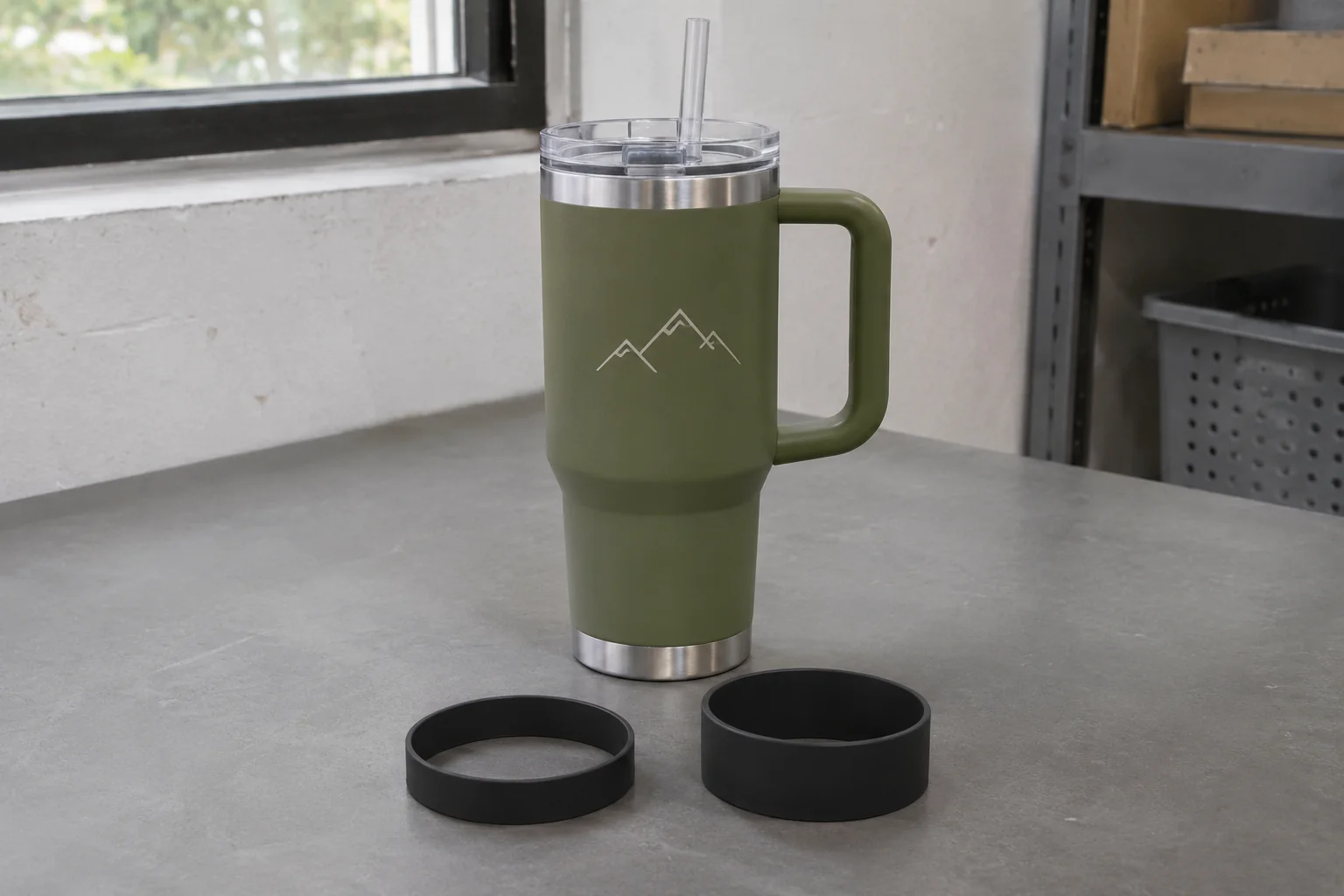
The buyer wanted a rugged camping tumbler with their own logo. The first conversation covered capacity, surface finish, ice retention, straw lid options, packaging and the delivery window. The distributor also wanted to know how complaints would be handled, whether the item would turn over at retail and whether neutral packaging was available. That discussion narrowed the sample list before the team settled on a design.
Use a second sample to lock the grip detail
The team confirmed the color and laser logo location with a visual proof before making the sample. After handling the first sample, the buyer asked for a thicker non-slip base ring. The team recorded the change and sent a revised sample. The approved ring, color and logo placement then became part of the pre-production reference shared with the buyer before the bulk run.
Agree what to check before the cartons close
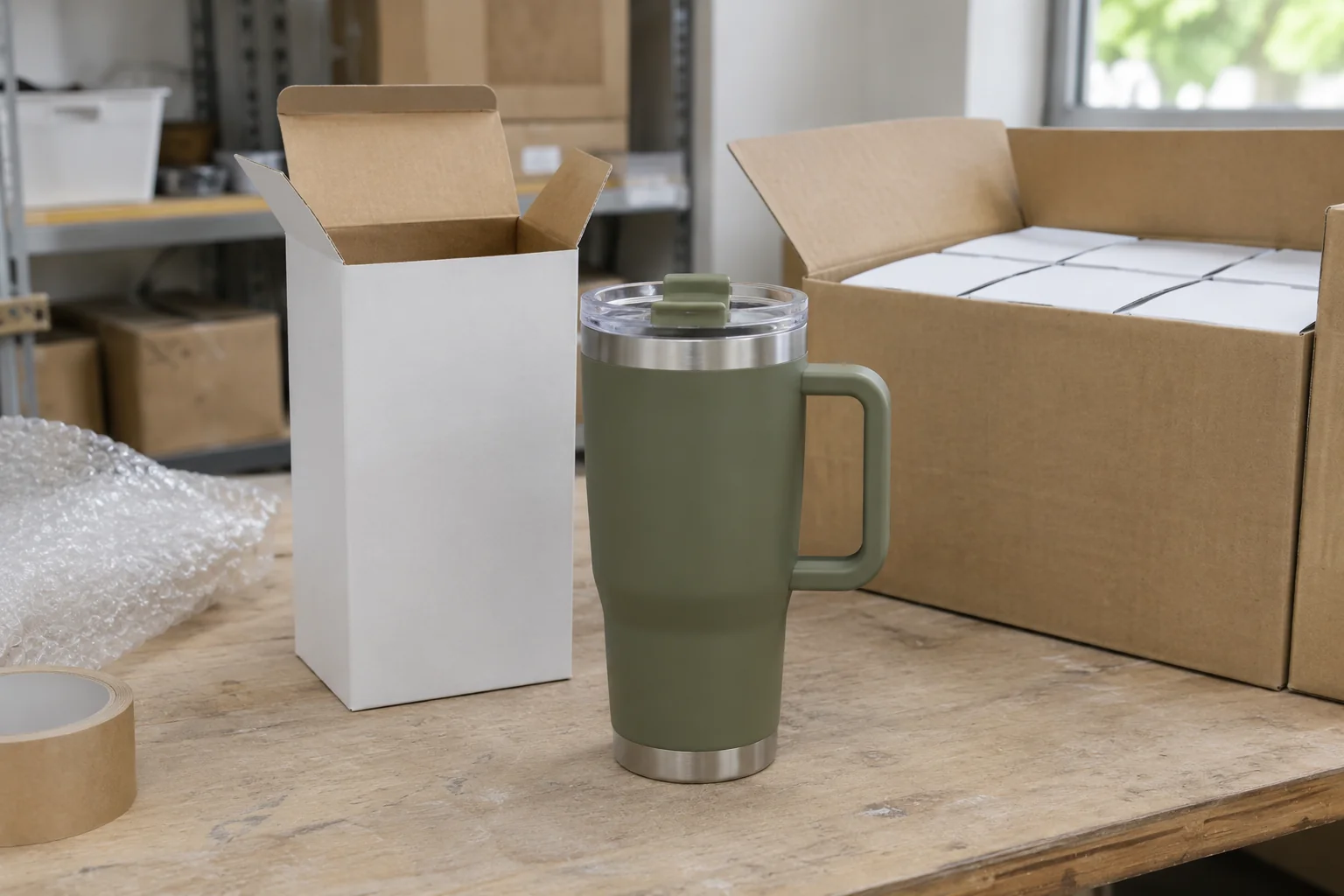
The production updates showed the relevant stages and the final assembly. The inspection plan covered sampled cold retention, lid and seal checks, and appearance checks for marks, color and logo position. The buyer received inspection photos and video and chose to review the evidence remotely. Supporting material and test documents were compiled for that order.
Ship in neutral packaging and follow up after delivery
The buyer selected individual neutral boxes and export cartons. The team shared shipping paperwork and tracked the ocean shipment through delivery. A follow-up focused on leaks and finish wear in actual use. The buyer placed a larger repeat order and added a smaller size to the range.