
How to Estimate Carton Volume and Container Loads
By Wu Gang, Export Logistics & Packaging Manager · Updated

Quick answer
Use the proposed carton size, gross weight and case pack to prepare a freight estimate.
Measure the sealed master carton
Estimate freight from the carton the carrier will receive. The bottle plan, retail box and catalog carton size help design the pack, while the actual closed master case gives the relevant outside dimensions for quoting.
Use production-intent cartons with the planned quantity, protection and labels. Measure length, width and height in the units the forwarder requests. Record each carton type separately if the order mixes sizes, counts or packaging revisions.
What should purchasing put in the initial brief?
During a review of case measurements, suppose a revised protective insert makes the closed carton bulge beyond the box supplier drawing. Ask for actual measurements from representative sealed master cartons. Watch for this risk: the freight quote changes when the forwarder remeasures the shipment.
Start by writing the buying decision in one sentence and sharing it with the supplier before asking for a sample. Include who will use the product and under what conditions. If several models are under consideration, give each its own line and identify which assumptions the models share. Ask the supplier to return any exceptions in writing so the sample team can focus on the decisions still open.
Calculate cubic meters and gross mass
Multiply external length, width and height in metres for the volume per carton. Multiply this by the number of identical cases. Use packed gross mass per carton and add pallets and associated material when those items travel.
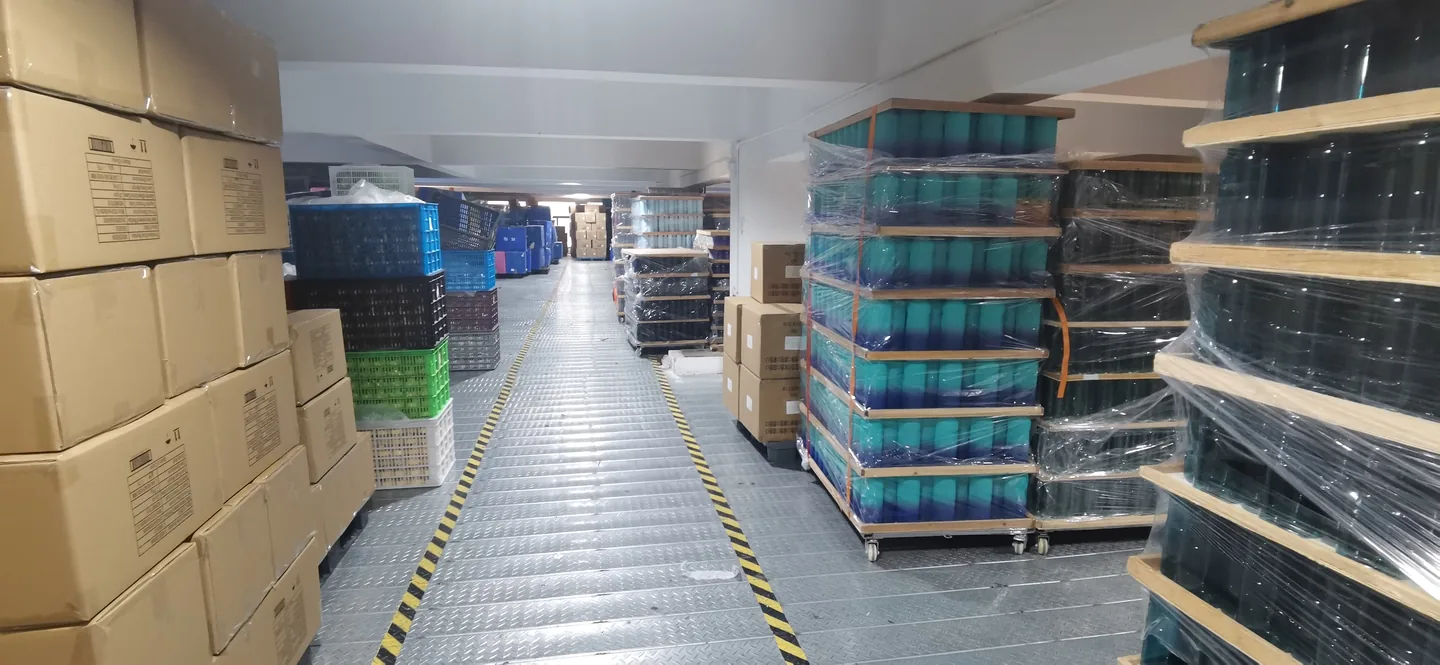
For example, a 52 × 35 × 30 cm case occupies 0.0546 cubic metres. Two hundred and fifty identical cartons occupy 13.65 cubic metres before any pallets. At 24 bottles per carton the order contains 6,000 units. At 10.5 kg gross per carton the cases weigh 2,625 kg.
What makes two proposals comparable?
During a review of shipment totals, suppose the same purchase mixes two capacities and a gift pack in different case counts. Ask for a separate case count, case cube and packed gross mass for each pack type. Watch for this risk: multiplying by one average case size misstates the mixed load.
Use the same quantity, delivery assumptions and version of the specification when soliciting alternatives. Ask each supplier to identify which details are included in their proposal and which would require separate development or testing. Save the assumptions alongside the quote. Once someone updates a sample or an input, record the resulting revision so the whole team is comparing proposals from the same round.
Calculate air chargeable weight
Air pricing commonly compares actual gross and volumetric weight. The carrier or forwarder confirms the governing divisor, rounding, minimums and shipment basis. Enter the packed dimensions in the units specified in the quotation.
Using an illustrative divisor of 6,000 cm³/kg, each example carton represents 9.1 kg of volumetric weight, or 2,275 kg for 250 identical cartons before rounding. The actual 2,625 kg is greater in this example. A larger carton with the same mass may reverse the comparison.
Which details should the supplier explain?
During a review of air pricing, suppose a comparison uses one carrier's dimensional factor for two different services. Ask for the divisor, rounding and billing mass for each written quote. Watch for this risk: a nominal per-kilogram comparison hides different chargeable weights.
Ask the supplier to identify what they can verify directly and what depends on a component partner, independent laboratory or carrier. Put names on the tasks and request the relevant evidence before the decision date. Keep supplier statements next to the supporting records so that a reviewer can distinguish a design proposal from an observation on a particular sample or shipment.
Model the 40-foot high-cube loading pattern
Published equipment dimensions provide inputs for an estimate. Record the actual equipment interior and door opening, allowable payload, stack limit, and floor-loading or pallet rules. Start with one permissible carton orientation and compare any alternatives.
For a basic straight grid, divide each usable interior axis by the corresponding carton dimension and round down on each axis before multiplying. Limit vertical layers to the approved stack height. Ask the forwarder to confirm the plan and clearances before promising the count.
What should the sample review confirm?
During a review of container plan, suppose the spreadsheet count assumes every carton can be rotated freely. Ask for allowed positions, door clearance and a verified stacking limit. Watch for this risk: a theoretical load requires orientations that can damage the packed product.
Agree the review location, conditions and timing with the people who will approve the result. Document what was reviewed as well as any deviation introduced during preparation, and make the sample or images available to purchasing, quality and product staff. Where an issue can be reproduced, retain the setup and sequence so a second person can check the observation before approval.
Separate palletized and floor-loaded designs
A pallet adds height, mass and footprint constraints. Forklift access, allowable overhang, the receiving dock, and the order in which cases must be removed all affect the result. Wooden packaging requirements may also need review for the destination.
Compare cartons per pallet, pallet height after wrap and number of pallet positions. For floor loading, plan case orientation, lateral gaps and safe unloading. Compare both configurations using the same quantity and arrival requirements.
What should a test or inspection record include?
During a review of pallet option, suppose the receiving warehouse requests pallets after the floor load was priced. Ask for the required pallet footprints, access rules, height and gross mass. Watch for this risk: the dispatch team discovers the revised order cannot be loaded as quoted.
Keep individual observations alongside the conclusion, including the item or lot ID, who recorded the observation, the conditions, and any agreed limitation. If the method changed partway through, retain both records and note which decision each supports. This gives the buyer an audit trail for the order and a baseline for investigating disagreement at first delivery.
Preserve protection as you reduce cube
Handles, broad bases, cup lids and spare caps can create gaps. Consider a revised orientation or divider once the artwork and product are ready for evaluation. Retain the protection needed for finishes, closure features and expected handling.
For a protective-pack change, track both shipping cube and receiving quality. Ask what could be damaged if a carton compresses, gets damp, or shifts. A reduced cube has limited value when the resulting damage creates replacements and handling costs.
When should the buyer ask for clarification?
During a review of protective pack, suppose carrying handles leave a gap that the packaging engineer wants to remove. Ask for a revised pack sample, size and weight measurements and a handling trial. Watch for this risk: cost savings are erased by the damage rate after transit.
Treat gaps in identification or scope as questions for the person who produced the evidence. Ask them to show how the report or quotation connects to the requested decision and confirm the response with the team that owns the order. If the issue matters to a contractual requirement or a public claim, document the answer in the approval file before the release deadline.
Compare quote scope and delivery risk
Collect rates using the same pickup point, destination, units, packaging, delivery deadline, and included legs. Distinguish freight from terminal, customs, fuel, handling and final-mile charges where the forwarder bills those separately.
For a launch, compare a small expedited allocation against sending the entire order by air or ocean. Include the costs of split handling and the commercial cost of a missed launch. Run the numbers per sellable unit at destination.
When should the team reopen the decision?
During a review of delivery comparison, suppose a distributor needs some units for a launch and the rest for replenishment. Ask for two comparable door-level quotes with the same cost inclusions and dates. Watch for this risk: a low linehaul rate obscures split-delivery costs and commitments.
List the changes that could invalidate the earlier review and agree who has authority to accept them. Ask the supplier to identify already-produced stock and open purchase orders when a change is proposed. Decide whether the change calls for a targeted review or a new sample, and record which shipments can proceed during the review.
Reconcile the plan at dispatch
After final packing confirm counts, dimensions, gross mass, carton markings and any pallets with the packing list. Have the loading team report changes from the estimated orientation or any cases that require separate handling.
Keep the quote, packing revision and actual load plan together. After receiving, collect damage observations by carton type and position so the next order can update the pack design and rate assumptions using comparable evidence.
What goes into the final approval file?
During a review of dispatch control, suppose the final run uses a few partial cases and a different pallet build. Ask for an updated packing list and a reconciliation against the booking. Watch for this risk: receiving cannot match the pre-alert counts to what actually arrives.
Archive the agreed specification, dated evidence and decision in one place. Include the acceptance criteria, any approved exception and the contact for future questions. When the same configuration is ordered again, confirm that the current purchase order still points to the same records. Use field feedback and receiving observations to flag criteria that should be revised for the next round.
Buyer questions
Can I use a carrier’s published cube to predict cartons per container?
Published volume provides an upper-level equipment reference. A usable estimate needs the dimensions inside the allocated equipment, door clearance, case orientations and approved stack height. Check that any required pallets, blocking, and handling space fit. For mixed cases, plan the loading pattern by type and how unloading will proceed. Ask the forwarder to verify the draft before you give a committed carton count to the buyer. Compare estimated capacity with the actual dispatch result to improve later bookings and understand how much of the remaining space was usable.
What is the simplest way to handle mixed cartons?
Use one line for each carton size or packing pattern. Record external dimensions, case count, units per case and packed gross weight, then sum the volumes and gross masses separately. Identify loose or partial cases and whether they can stack with full cases. For air, ask how dimensional weight and rounding are applied. Palletized shipments need an additional record for the outside dimensions and gross weight of each completed pallet. Share this table with receiving and the forwarder so both comparisons and counts are based on the same shipment description.
When does a smaller carton actually improve costs?
A smaller case can reduce billed cube, volumetric mass, or allow another row in practical loading. The impact depends on the quote basis, actual packed mass, stackability, and capacity thresholds. Run both designs through the applicable carrier quote and compare damage protection before approving the smaller size. Some savings only appear when the dimensional change crosses a rounding or placement threshold. If the current case still charges on gross mass in air service, a small cube reduction may change storage or handling costs more directly than the air rate. Include all relevant costs before choosing.
How do I compare air and ocean for a launch?
Give each forwarder the same ready date, destination requirements and complete packing details. Ask for delivery windows, inclusions, exclusions and the handling of possible delays. Compare the shipped quantity and expected sellable inventory at arrival. For a split shipment, estimate the second booking, receiving work and any duplicate charges. Link the planned allocation to a real business deadline, such as a retail launch, rather than an arbitrary percentage of the order. Leave realistic time between transit completion and store or distribution availability when comparing whether each option meets the launch date.
Which data should be collected after the first shipment?
Record booked and actual packed dimensions, weight, case counts, loading orientation and final delivered quantities. Add receiving observations from damaged positions and compare the freight invoice against the quotation. Ask the warehouse to connect reported damage to a carton type and, where known, position. Changes to the pack, case count or carrier should be reflected in the next quote. Keeping one dated record makes it easier to tell whether the next order is genuinely comparable or whether a new packing or transport assumption has changed the result.
References
Compare outdoor drinkware configurations