Powder Coating for Outdoor Drinkware: Sample Approval
By Zhang Mei, Surface Finishing & QA Director · Updated
Quick answer
Review color, texture and artwork on the final surface before approving production.
Approve the finish as a system
A powder-coated bottle requires decisions about the metal, preparation, coating, cure, artwork and ordinary exposure. The same color name can look different on a curved shoulder and a flat panel, and decorative artwork can add its own durability questions.
Identify the exact body and colorway, then list expected contact with hands, bottle cages, backpacks and cleaning tools. Share this use profile when asking a supplier to recommend samples and describe the coating scope.
What should purchasing put in the initial brief?
During a review of finish scope, suppose a retailer wants one finish for a trail bottle and a camp flask with different shapes. Ask for production-intent bodies, color recipe, decoration and expected wear zones. Watch for this risk: the same finish is approved from one shape and then rejected on the other.
Start by writing the buying decision in one sentence and sharing it with the supplier before asking for a sample. Include who will use the product and under what conditions. If several models are under consideration, give each its own line and identify which assumptions the models share. Ask the supplier to return any exceptions in writing so the sample team can focus on the decisions still open.
Match color and texture on a completed bottle
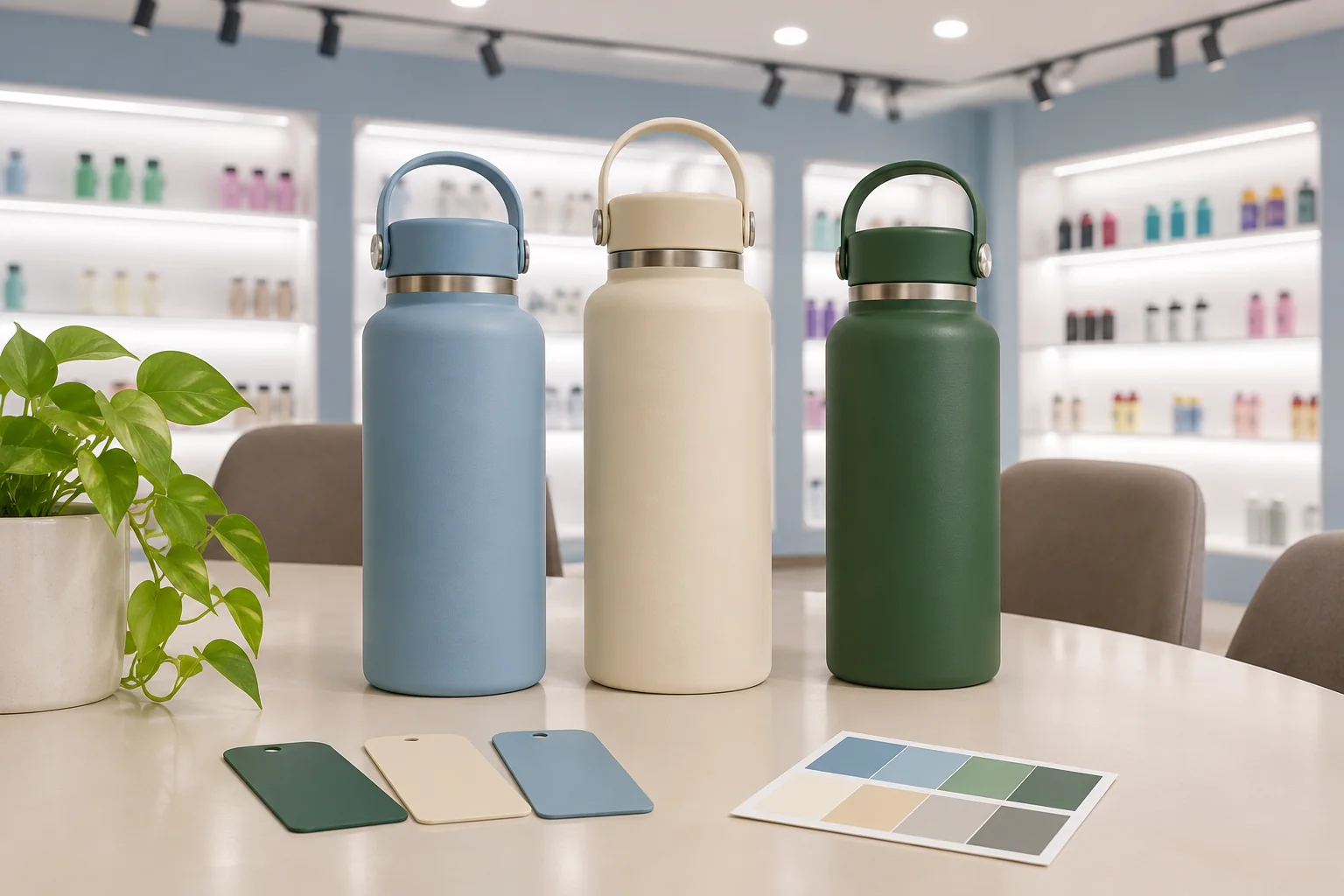
Review the proposed finish in more than one lighting condition. A camp-store shelf, daylight and office lighting can emphasize different undertones. A flat swatch is a useful early reference, while a complete bottle shows how curvature and shadows affect the overall appearance.
Decide what variations matter to the range. If a bottle has a molded cap matched to an olive body, compare them together before approving either part. Label the approved master with the coating, substrate, artwork and cap revision.
What makes two proposals comparable?
During a review of color, suppose the cap matches the coated wall indoors but looks warmer at the shop entrance. Ask for a complete colorway under agreed light with a retained master sample. Watch for this risk: inspection staff compare the assembled product under incompatible conditions.
Use the same quantity, delivery assumptions and version of the specification when soliciting alternatives. Ask each supplier to identify which details are included in their proposal and which would require separate development or testing. Save the assumptions alongside the quote. Once someone updates a sample or an input, record the resulting revision so the whole team is comparing proposals from the same round.
Inspect preparation and coverage around geometry
The shoulder, foot, lip transition, edges and masked areas can show differences that are hard to see in a product photo. Examine the zones likely to rub against a cage, rest on the ground or receive a tightly applied boot.
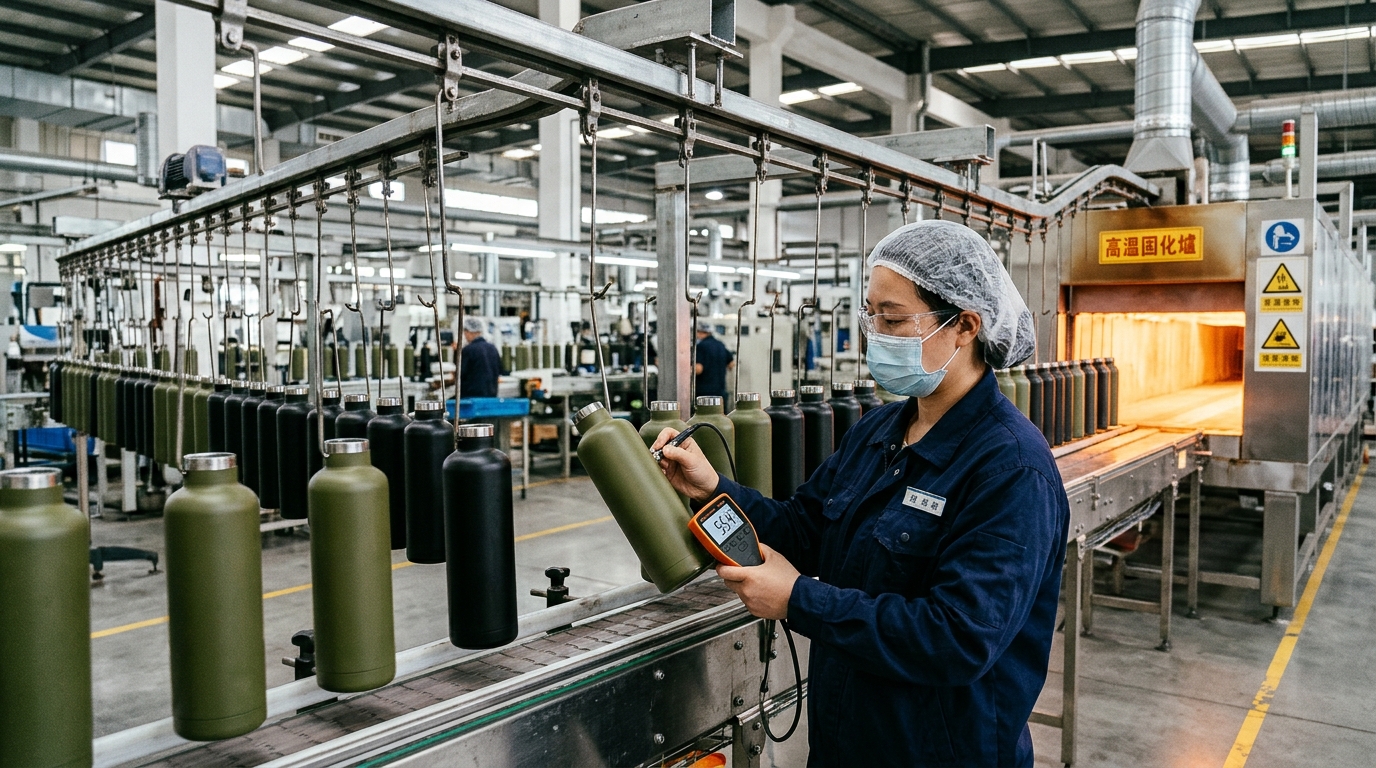
Check for visible pinholes, gaps and accumulations against the agreed cosmetic criteria. Ask how samples were cleaned, prepared and cured and whether the production line will follow the same sequence. Agree where electrical grounding points and intentional masking may appear.
Which details should the supplier explain?
During a review of coverage, suppose a new body shape puts a narrow radius beside the contact zone of the protective boot. Ask for detail photographs, masking boundaries and an assembled boot fit. Watch for this risk: a finish defect is hidden until accessories are fitted.
Ask the supplier to identify what they can verify directly and what depends on a component partner, independent laboratory or carrier. Put names on the tasks and request the relevant evidence before the decision date. Keep supplier statements next to the supporting records so that a reviewer can distinguish a design proposal from an observation on a particular sample or shipment.
Specify adhesion with the applicable method
ASTM D3359 covers tape-test methods for rating adhesion of coatings. Agree which method, substrate and test location the lab will use, because the chosen procedure and surface can affect the meaning of the rating. A flat witness panel and the side of a bottle may require different handling.
If a customer requests a specific result, obtain the method designation, observations and sample references. Keep an adhesion test separate from cage rub, impact, and field wear evaluations so each result answers a clear decision.
What should the sample review confirm?
During a review of adhesion, suppose a buyer receives a tape-test result recorded without the surface and test location. Ask for the test method, sample reference, location and observations. Watch for this risk: the report is applied to a curved production bottle without a sound basis.
Agree the review location, conditions and timing with the people who will approve the result. Document what was reviewed as well as any deviation introduced during preparation, and make the sample or images available to purchasing, quality and product staff. Where an issue can be reproduced, retain the setup and sequence so a second person can check the observation before approval.
Add a beverage and cleaning scenario
Check whether users are likely to clean with a soft cloth, a brush, or a dishwasher when promoted for that model. Establish the buyer's expected care label before selecting the exposure profile and include relevant rinse, heat and drying conditions.
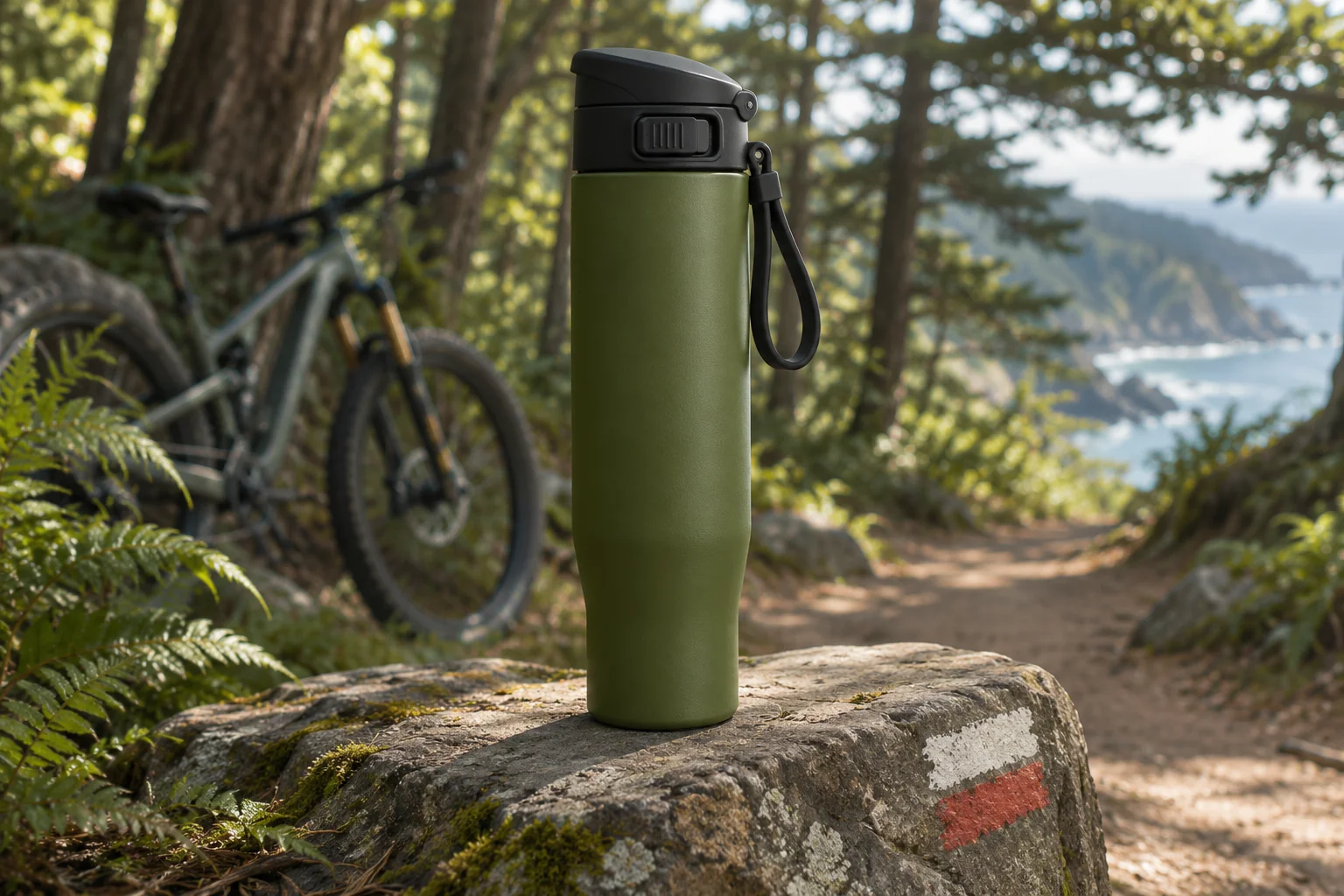
For a backpacking bottle, consider repeated friction against the actual cage or pouch where the concern is cosmetic rub. Review the body, base and graphics after the exposure. Agree a photo reference and acceptance threshold before judging the result.
What should a test or inspection record include?
During a review of wear, suppose camping stores report rubbed patches after bottles are put into a metal cage. Ask for a cage fit sample and before-and-after photos under agreed lighting. Watch for this risk: ordinary friction damage goes unseen in a color-only review.
Keep individual observations alongside the conclusion, including the item or lot ID, who recorded the observation, the conditions, and any agreed limitation. If the method changed partway through, retain both records and note which decision each supports. This gives the buyer an audit trail for the order and a baseline for investigating disagreement at first delivery.
Evaluate artwork independently
A laser-marked logo, printed graphic and transferred motif are different processes. Compare edge definition, contrast, layout on the curve and how the applied artwork behaves during handling. Check positioning from seams, the cap face and retail-facing orientation.
If two decoration routes remain in contention, order both on matching bottles. Check each for appearance with the chosen color and repeat the relevant wear check. Include artwork file revision and size in the signed approval pack.
When should the buyer ask for clarification?
During a review of artwork, suppose a logo wraps too far around the curve to face shoppers in the planned display. Ask for the actual artwork version, retail orientation and signed sample. Watch for this risk: an approved flat proof yields a poorly positioned final mark.
Treat gaps in identification or scope as questions for the person who produced the evidence. Ask them to show how the report or quotation connects to the requested decision and confirm the response with the team that owns the order. If the issue matters to a contractual requirement or a public claim, document the answer in the approval file before the release deadline.
Clarify coating formulations and supplier statements
If a customer requests a TGIC-free formulation, state the request on the purchasing brief and ask for supporting documentation for the specific powder, colorway and supplier. Agree a process for changes in formulation or powder source.
Review formulation and performance as separate evidence. The appearance and coating adhesion of one product do not establish formulation. Match every public statement to the exact product and support it with the corresponding documentation.
When should the team reopen the decision?
During a review of formulation, suppose the requested dark and light powder colors originate from different suppliers. Ask for documentation scoped to each exact powder and colorway. Watch for this risk: a single supplier statement gets reused for unrelated powders.
List the changes that could invalidate the earlier review and agree who has authority to accept them. Ask the supplier to identify already-produced stock and open purchase orders when a change is proposed. Decide whether the change calls for a targeted review or a new sample, and record which shipments can proceed during the review.
Create a usable visual acceptance standard
Photographs of borderline cases can prevent a lengthy dispute after packing. Mark where on the bottle each defect appears and specify lighting, viewing distance, orientation and inspection boundaries where those details affect interpretation.
An illustrative receiving check might distinguish stable texture variation on the underside from conspicuous bare metal on the front face. Agree treatment of each with the buyer, then brief the supplier and inspection team with the same photographs and sample revisions.
What goes into the final approval file?
During a review of release, suppose two inspectors classify a faint patch on the underside differently. Ask for an illustrated boundary guide and matching viewing conditions. Watch for this risk: a finish dispute delays packing after all units have already been painted.
Archive the agreed specification, dated evidence and decision in one place. Include the acceptance criteria, any approved exception and the contact for future questions. When the same configuration is ordered again, confirm that the current purchase order still points to the same records. Use field feedback and receiving observations to flag criteria that should be revised for the next round.
Buyer questions
What should be included in a finish sample pack?
Use a completed bottle, signed finish reference, artwork proof, coating code, revision and relevant care expectations. Request more than one unit where repeatability matters and include every visible part if color matching is important. Keep the final signed master free from destructive tests so it remains available for production and receiving comparison. Label the units allocated to testing and the person retaining the master. Where a factory and distributor both inspect the same launch, provide a matching reference to each and document any approved variation. Include the cap and base protection if those parts influence the appearance.
How should a buyer compare matte and textured surfaces?
Compare the completed shapes at the same distance in consistent light. Handle both finishes with dry and damp hands when grip matters and evaluate cleaning on the approved surfaces after ordinary use conditions. Record reflections at the shoulder separately from color on the broad side wall. Inspect the finish alongside other parts such as the cap and silicone boot. If a store plans to display the bottle close to an exterior window, review it in daylight before approval. Select the reference that customers will actually see, then record the conditions so production inspectors use a comparable check.
Does a high tape-test result predict field wear?
Tape-test results address adhesion under the selected procedure. In actual use, a bag buckle, metal cage, grit or repeated placement on a rough surface can produce a different type of wear. Agree separate field-relevant profiles for those exposures and inspect the finished product after each. Discuss where visible wear is consequential and document how the inspection is conducted. A scratch on a decorative front panel and a faint change near the underside can have different commercial impacts. Retaining that distinction helps the buyer decide which revisions deserve a new sample and which can be approved through routine inspection.
What if we change the logo after color approval?
Review a newly decorated, production-intent sample. Check artwork size, location and contrast on the finished shape, then repeat whichever handling or care checks could be influenced by the decoration. If the new design changes print coverage or the marking method, tell the supplier which areas are critical. Keep the color approval and the artwork approval as identifiable records with their own dates and references. Store the approved artwork file with the item code so production avoids a previous layout. When practical, photograph the assembled bottle oriented as it will appear in the retailer’s display.
How should borderline finish defects be judged?
Agree an inspection method and examples before production. Identify viewing conditions, surface zones and whether a feature is visible under normal use. Define which examples can be accepted by inspection staff and which should be escalated to purchasing. Keep images and a written decision if a borderline unit is approved for a specific run. An exception tied to a batch is easier to manage than an informal revision of the entire customer standard. At receiving, use the same decision record so the supplier, inspector and buyer judge appearance against the same reference.
References
Explore the Forest Switchback insulated bottle