Product Documentation for EU Drinkware Buyers
By Zhou Fang, Regulatory & Export Compliance Lead · Updated

Quick answer
Use the catalog record to identify the model, then confirm the documentation required for the intended market.
Identify the specific article and intended use
Create a configuration record that names the bottle, capacity, body material, coating, cap, stopper, gasket and any interchangeable accessories. Identify hot and cold use, realistic contact time, repeated use, likely beverages and the care instructions.
The importer can then discuss which EU and national rules are relevant to the exact product with qualified compliance support. A matrix organized by configuration is especially useful when a catalog contains optional lids and finish choices.
What should purchasing put in the initial brief?
During a review of product definition, suppose an importer adds a straw closure to a product originally intended for cold water. Ask for the assembly revision, intended temperatures and care instructions. Watch for this risk: the importer relies on an evidence file scoped to an earlier closure.
Start by writing the buying decision in one sentence and sharing it with the supplier before asking for a sample. Include who will use the product and under what conditions. If several models are under consideration, give each its own line and identify which assumptions the models share. Ask the supplier to return any exceptions in writing so the sample team can focus on the decisions still open.
Map the food-contact components
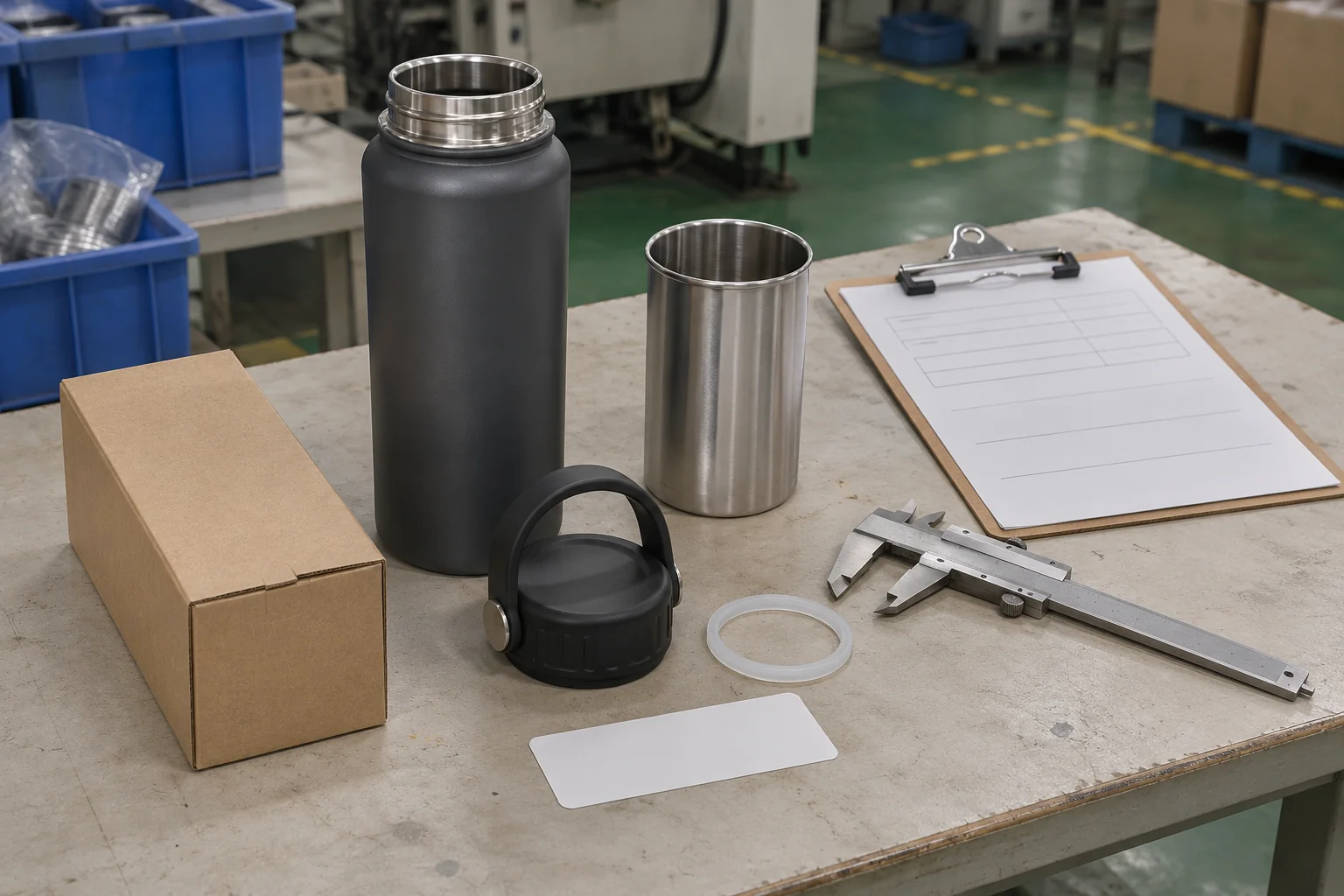
The liner is often the most visible contact surface, but liquid can touch stopper parts, sealing rings and other components in use or transport. List the parts, material references and conditions of actual or foreseeable contact, including inverted transport.
Ask for supporting records at component and assembly level where applicable. Include identifiers and the parties responsible for maintaining each file. This lets purchasing see what changes when a seal color, plastic vendor or closure design is revised.
What makes two proposals comparable?
During a review of component mapping, suppose a stopper contacts the beverage only when a packed flask is inverted. Ask for a drawing and contact matrix covering ordinary transport and use. Watch for this risk: a contact surface is skipped because it sits above the maximum fill line.
Use the same quantity, delivery assumptions and version of the specification when soliciting alternatives. Ask each supplier to identify which details are included in their proposal and which would require separate development or testing. Save the assumptions alongside the quote. Once someone updates a sample or an input, record the resulting revision so the whole team is comparing proposals from the same round.
Understand declarations and supporting records
Regulation (EC) No 1935/2004 establishes a framework for food contact materials. Article 16 addresses written declarations and supporting documentation under applicable specific measures. Member States can have national provisions in the absence of specific measures, so assess the destination and material.
Build the file around the applicable requirement by component or article. Ask whether the document is a declaration under a particular measure, an internal statement, a lab report or a specification. Different document types answer different questions.
Which details should the supplier explain?
During a review of declarations, suppose a supplier binder contains several documents titled certificate. Ask for the issuer, configuration, applicable measure and document scope. Watch for this risk: purchasing treats unlike documents as interchangeable approval evidence.
Ask the supplier to identify what they can verify directly and what depends on a component partner, independent laboratory or carrier. Put names on the tasks and request the relevant evidence before the decision date. Keep supplier statements next to the supporting records so that a reviewer can distinguish a design proposal from an observation on a particular sample or shipment.
Check the connection between reports and the ordered item
Read the sample identification, contact surfaces, exposure details, procedure, issue date and conclusions. Identify the relationship between the tested sample and the exact version to be placed on the market, including coatings, gaskets and different suppliers.
A report for a comparable configuration can help a reviewer select what to investigate. Where the importer proposes relying on that evidence, obtain an explicit rationale for the match and review any gaps with the responsible specialist.
What should the sample review confirm?
During a review of report coverage, suppose a report names the bottle body but does not identify the revised closure. Ask for an evidence matrix showing the exact tested parts and revisions. Watch for this risk: an unrelated test is used to support a claim for the complete assembly.
Agree the review location, conditions and timing with the people who will approve the result. Document what was reviewed as well as any deviation introduced during preparation, and make the sample or images available to purchasing, quality and product staff. Where an issue can be reproduced, retain the setup and sequence so a second person can check the observation before approval.
Set up traceability through production and shipment
Article 17 of the framework regulation addresses traceability at all stages to facilitate controls, recalls, consumer information and responsibility. Translate the obligation into a workflow from approved bill of materials to production lot and shipping documents.
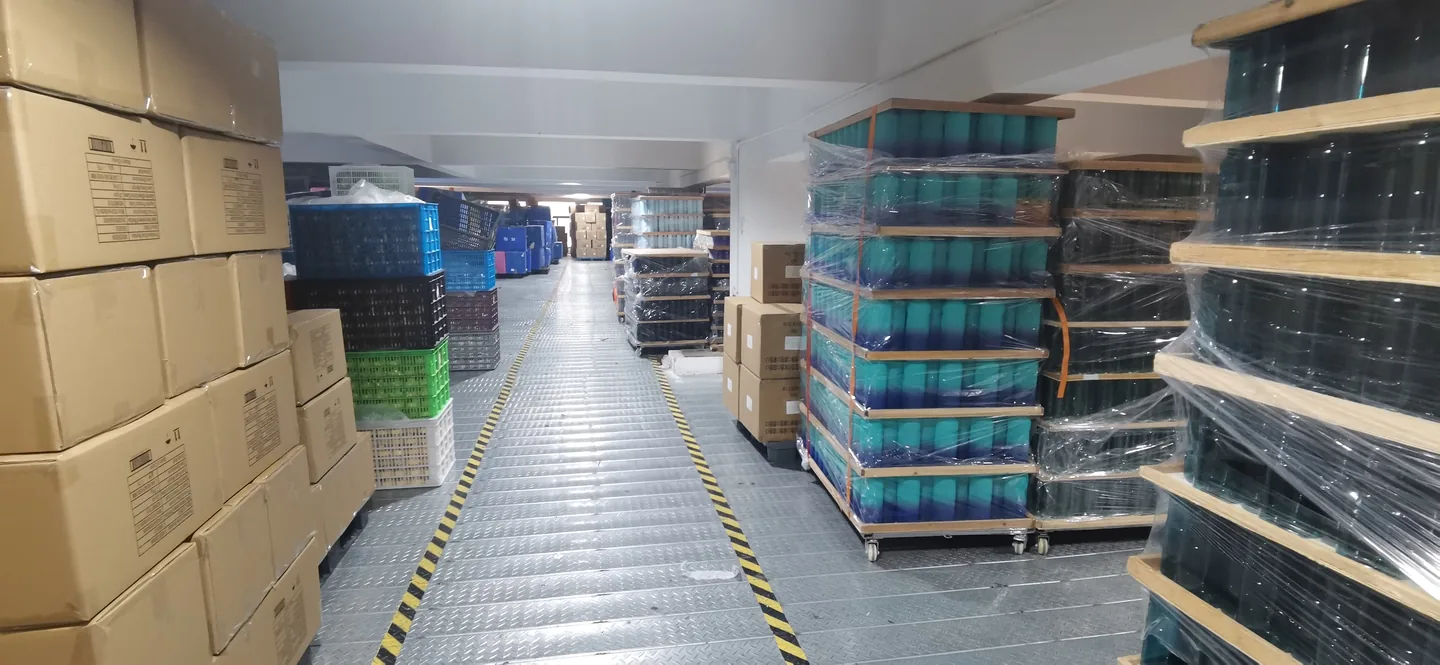
Map which records remain available after delivery. Ask the buyer and supplier how a field complaint would be traced to the affected purchase, shipment, batch and component records. Include a contact responsible for maintaining the mapping and responding to issues.
What should a test or inspection record include?
During a review of traceability, suppose a customer complaint points to one shipment with several production lots. Ask for the packing list, mapped lot labels and component identity records. Watch for this risk: containment extends to all stock because no smaller affected set can be established.
Keep individual observations alongside the conclusion, including the item or lot ID, who recorded the observation, the conditions, and any agreed limitation. If the method changed partway through, retain both records and note which decision each supports. This gives the buyer an audit trail for the order and a baseline for investigating disagreement at first delivery.
Keep ESPR and product passports in their proper scope
Regulation (EU) 2024/1781 establishes a framework for ecodesign requirements for sustainable products. Digital product passport duties depend on applicable measures for the product group and their timing. Review the current scope for the specific product at the point of decision.
A voluntary online product record can help organize revision, material and traceability information. Review any claim that a product or passport fulfills a legal requirement against the relevant measure and the evidence available for the specific configuration.
When should the buyer ask for clarification?
During a review of ESPR review, suppose a distributor asks whether a voluntary digital record satisfies a passport requirement. Ask for the specific measure, product group and effective dates identified by the reviewer. Watch for this risk: the presence of a QR code is represented as proof of legal compliance.
Treat gaps in identification or scope as questions for the person who produced the evidence. Ask them to show how the report or quotation connects to the requested decision and confirm the response with the team that owns the order. If the issue matters to a contractual requirement or a public claim, document the answer in the approval file before the release deadline.
Control changes that look cosmetic
A new gasket pigment, replacement coating supplier, and extended accessory list can change the relevance of the documentation. Similar appearance is a poor indicator of whether component identity or contact conditions changed.
Define which changes trigger review with the importer. Request notice before a substitution enters production, identify affected batches and retain a separate approval record. Update product statements and intended-use information after the review.
When should the team reopen the decision?
During a review of change control, suppose production proposes a second gasket source without a new drawing number. Ask for the component change record and a review of the evidence affected. Watch for this risk: the importer first learns of the change after launch.
List the changes that could invalidate the earlier review and agree who has authority to accept them. Ask the supplier to identify already-produced stock and open purchase orders when a change is proposed. Decide whether the change calls for a targeted review or a new sample, and record which shipments can proceed during the review.
Make records usable for purchasing and compliance
Assemble a short index linking purchase specification, component list, applicable declarations, supporting reports, intended use, packaging and traceability. Give each file an owner, a date and a revision identifier.
Use a supplier quotation to begin the index, then update it at sample approval, before the first shipment and at subsequent revisions. For an audit, the buyer should be able to explain why a given report was included and which configuration it covers.
What goes into the final approval file?
During a review of handover, suppose a new purchasing manager inherits lab reports stored by supplier, with no version index. Ask for an indexed file showing the owner, effective date and exact product. Watch for this risk: a superseded report is circulated because it looks newer than the purchase specification.
Archive the agreed specification, dated evidence and decision in one place. Include the acceptance criteria, any approved exception and the contact for future questions. When the same configuration is ordered again, confirm that the current purchase order still points to the same records. Use field feedback and receiving observations to flag criteria that should be revised for the next round.
Buyer questions
Is a generic supplier certificate enough for an EU file?
Ask what requirement the document addresses, who issued it, how it identifies the finished item, and what component versions and contact conditions it covers. A general certificate can provide supplier background, while the file for a specific configuration needs the applicable evidence reviewed by the party responsible for placing it on the market. Confirm that the intended use shown in the product instructions agrees with the reviewed conditions. If a distributor markets several variants under one name, keep one row for each variation and a reference back to the declaration or supporting report that actually applies.
When should a declaration of compliance be requested?
The responsible party should determine which specific measures and national rules apply to the materials and destination. Request a declaration where the applicable requirements call for one and review it together with the supporting records. Record the scope and version so procurement can see precisely what the document covers. If a product combines a metal liner and different closure materials, build the file by component and assembly as appropriate. Ask the qualified reviewer how to handle an unresolved question before the product launches. A clear status for each document helps avoid treating a procurement request as an approval.
Does each new decorative color require the same review?
Ask what changed and where the change occurs. A coating confined to the outside, a pigment in a drinking spout and a changed seal are different changes with different foreseeable contacts and evidence needs. The owner of the documentation should decide what must be updated for the relevant product and intended use. Explain the revised configuration with a part list, contact map and supplier records. Where the change reaches the mouth or beverage path, review the underlying rationale carefully. Retain the decision and identify the first batch made under the new revision.
How can a buyer run a useful traceability check?
Choose a packed unit with a code and follow it backward to the order, assembly lot and relevant parts. Then follow the same records forward to the shipments that received that lot. Note where the link breaks or requires undocumented supplier knowledge. Ask both sides to demonstrate how they can retrieve the relevant documents within the time required by their own response procedure. A buyer can use the result to improve recordkeeping before relying on the process for complaints or a recall. Include the exact product version and any temporary exceptions in the traceability file.
Does a voluntary product record make an item ESPR-compliant?
A voluntary record helps people find product information and supporting documents. A conclusion about ESPR duties depends on measures and dates applicable to the product group and the actual information requirements. Review that question separately for the specific product and sales date. A distributor requesting a digital passport can describe why they need the data, which records must be current, and who will update them after a change. A named record owner and reliable revision control make the information more useful regardless of the publication format or how a buyer scans the code.
References
See the testing and documentation overview